
Six Weeks Left on China's Rare Earth Truce, and Yes, the Impact is Coming for You
I've watched every season of Star Trek: Discovery, and I've noticed a pattern the writers apparently can't quit. Every single season, the entire universe is about to end. Season two it's Control, an AI trying to wipe out all sentient life. Season three it's the Burn, a mystery explosion that torches the galaxy's dilithium supply and strands the whole Federation. Season four it's Species 10-C, aliens who nearly wipe out several star systems by accident because nobody bothered to say hello first. Four seasons, four apocalypses, and somehow Michael Burnham makes it to the next season finale every single time.
I bring this up because there's a real countdown running right now with the same energy. November 10, 2026. Six weeks out, give or take, from whenever you're reading this. Nobody's going to war over it and no starship required, but it's the same shape of story: a clock ticking down to a decision that reshapes everything downstream of it, and almost nobody outside the people paid to watch it even knows it's running.

Here's what's actually happening, minus the trade-jargon.
In April 2025, China locked export licensing on seven medium and heavy rare earth elements. That regime never went anywhere. It's fully in force today, no suspension, no truce, nothing. Then in October 2025, Beijing announced a much bigger version: extraterritorial licensing reach, five more elements added to the list, and controls on the actual processing technology, not just the raw material.
That bigger version got paused for exactly one year as part of the trade truce that came out of the Xi-Trump meeting. The pause runs out November 10, 2026.
Nobody outside a small number of rooms in Beijing knows what happens on November 11th. They could extend it. They could let the whole thing snap back into force. They could split the difference and reinstate half of it, because that's the kind of thing trade policy does to keep everyone guessing. What every industry tracker agrees on is simpler: don't plan a supply chain around the assumption that the pause is permanent. Right now it's a pause, not a peace treaty.
And while we've all been staring at that clock, China has kept doing the thing it's already good at, deadline or no deadline: it still controls roughly 90% of the world's rare earth processing capacity. Approval rates for European buyers trying to get licenses under the still-active April rules have been running below 25%. Prices for the scarcer heavy rare earth elements are up sixfold this cycle. NdPr, the alloy that goes into basically every EV traction motor and wind turbine on the planet, opened this year around $53 a kilogram and blew past $126 by April. That's not a rounding error. That's the market telling you something's not right.
I've seen this movie before, just with chips instead of magnets.
I've watched this exact dynamic play out before, just with a different material, and it's why "raw materials stuff always sorts itself out" is the wrong instinct.
At Particle, an IoT hardware company, I ran sourcing, purchasing, logistics, and project engineering straight through COVID and the global chip shortage that followed. First COVID hit and entire supplier lines just went dark. Not delayed. Dark. Then, as things reopened, a bunch of our chip suppliers pivoted their fabs to newer, more profitable chip lines, which meant a lot of the older chips our existing hardware was designed around simply stopped being made. No warning email, no grace period, just gone. We had to throw out the sales forecast and reverse-engineer what real customer demand actually was, qualify substitute components fast enough to keep builds on schedule, and get enough finished product built and shipped on time to meet it. We took lead times on certain components from nine weeks down to one. And here's the part that still surprises people when I tell it: despite COVID and the worst chip shortage in a generation, our revenue story never showed the distress everyone assumed it would. We didn't just hold the line. We beat our previous highs.
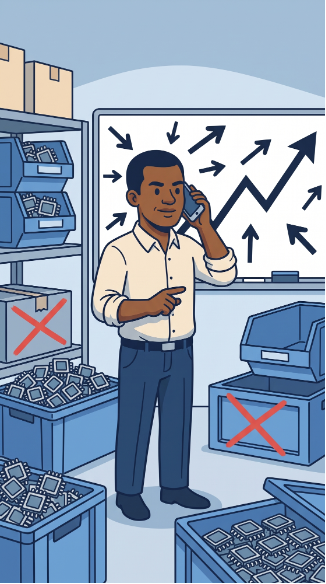
Now scale that same problem, real components going scarce for reasons that have nothing to do with your company and everything to do with someone else's geopolitics, up to an entire category of elements that goes into your car, your phone, your power tools, your hearing aids, and a real chunk of the US defense industrial base. That's the rare earth story. It's not new. It's just finally loud enough that people outside supply chain rooms are being forced to notice.
Does this actually matter? And to who?
Not in the abstract, downstream-supply-chain-risk sense. To an actual person, this year. Here are three.
Sharon
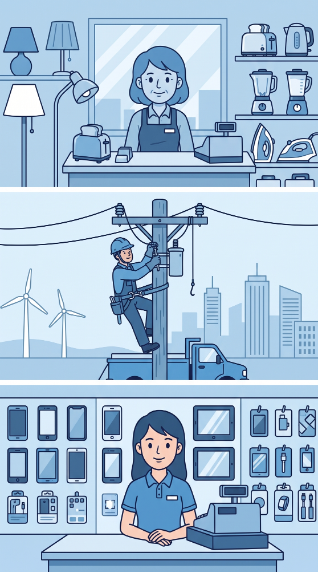
Sharon is 44, runs a small home-goods shop that imports lighting fixtures and small appliances from China and sells them locally, and has been eyeing a hybrid or EV to cut her gas bill now that prices are up. Her son just left for his sophomore year of college. Her daughter is a senior in high school.
Three things land on Sharon before the year is out. First, the hybrid she's been circling got more expensive and harder to find, because the traction motor inside it runs on the same NdPr magnets that are up sixfold this cycle, and automakers have already started trimming the trims that don't pencil out anymore. Second, her supplier in China is quietly passing through higher costs on every lighting fixture and small appliance with a motor or an LED driver in it, and that's coming straight off her margin, because she can't raise her local prices as fast as her costs are rising. Third, the family dishwasher that finally died in August is going to cost more to replace than it would have last year, so it's getting patched instead, right as two college-adjacent expenses hit the same checking account. None of this shows up as a headline about China. It shows up as Sharon's Terrible, Horrible, No Good, Very Bad Finances for the month.
Dale
Dale is a lineman for a transmission utility inside ERCOT territory, the Texas grid. Texas entered 2026 with nearly 14 gigawatts of grid-scale battery storage, almost double what it had a year earlier, built specifically to keep the lights on as data centers push the state's peak power demand from around 87 gigawatts today toward roughly 138 gigawatts by 2030. That buildout runs on the same magnets everyone else is fighting over.
Three things land on Dale before the year is out. First, new battery and wind projects slow down or get repriced as components get scarcer and pricier, right when demand is climbing fastest, which is the exact setup for the kind of scarcity event that used to be rare and is becoming routine. Second, when a scarcity event or a grid strain hits, Dale is the one getting the 2am callout, so a slower buildout doesn't stay abstract. It shows up as more overtime and more nights away from his own family. Third, his own power bill goes up right along with everyone else's, because tighter supply and rising demand push rates the same direction no matter which side of the meter you're standing on.
Destiny
Destiny is 21, works the floor at an electronics retail store, and goes to community college part time after a rough first semester at a four-year school left her with loan payments and no degree yet. She still lives at home.
Three things land on Destiny before the year is out. First, her own phone is three years old and the battery's failing, and the replacement she's been putting off just got more expensive for the same reason everything else in this piece did, at the worst possible moment against a loan payment she can't skip. Second, her commission checks get thinner if pricier phones push customers toward cheaper, lower-margin models, or push them to wait another few months before buying at all, and her hours are the first thing that gets trimmed if store traffic slows. Third, the used car she's saving toward, the one that was supposed to be her ticket to moving out, keeps getting further away, because even a modest hybrid or EV on the used lot now carries the same component costs as a new one. None of this reads as a rare earth minerals problem to her. It reads as everything costing more while her paycheck stays the same.
The rest of 2026: watch the clock, not the headlines.
Between now and November 10, expect three things. First, prices stay volatile and elevated, because approval rates under the rules that never got suspended are already running below 25% for European buyers, and nobody's betting that gets easier before the deadline. Second, companies that can afford to are quietly front-loading orders and building inventory before the pause expires, the same way you'd stock up on something right before a price hike you already know is coming. Third, watch for more moves like Toyota's hybrid SUV order halt earlier this year: quiet production adjustments, not press conferences, showing up three to six months before anyone reports on them as a trend.
The date itself matters less than what it represents: the moment Beijing has to choose, again, whether the broader controls come back or the pause gets extended. Either way, the operating assumption holds. Don't plan around the suspension being permanent.
2027 and beyond: help is coming, just not fast, and not enough of it yet.
This is where I'd love to hand you a clean happy ending, and I can't, because two things are true at once.
The good news: Western supply is actually being built. MP Materials is on track to bring meaningful US heavy rare earth separation capacity online around this same window, with large-scale domestic magnet manufacturing scaling up by 2028. Add up everything in development across allied countries and you get roughly 19,500 metric tons of magnet production capacity by 2028, which sounds like a lot until you realize that's about equal to current US consumption today, not future demand, which keeps growing every year as EVs and defense programs both expand.
The less good news: the IEA has estimated that full implementation of China's rare earth controls could put $6.5 trillion of downstream production outside China at risk. That's the number that tells you how much leverage sits on the other side of the table even during a pause. Diversifying away from a country that controls 90% of processing doesn't happen on a press release timeline. It happens on a multi-year, capital-intensive, permit-and-build timeline, and 2027 is the early middle of that story, not the end of it.
So here's the actually useful version of "so what do I do about it":
- Expect a price increase on anything with a motor, a magnet, or a battery in it, and budget for it before it shows up as a surprise on an invoice or a sticker price.
- Watch your own supply chain, not the news cycle. If you run a business, or work for one that imports components, the price and delivery signals show up months before the headline does.
- Don't assume November 10th resolves anything either way. Plan like the pause could end tomorrow, and be pleasantly surprised if it doesn't.
- If you've got a big purchase riding on this, an EV, a hybrid, an appliance, anything with a battery, decide before the deadline, not after. Waiting to see what happens is itself a bet. Just an unpriced one.

Here's the thing about Star Trek: Discovery that actually applies. The universe never really ends. Burnham finds a way, the Federation regroups, the next season picks up like the last one didn't nearly wipe out all sentient life. But somebody on that ship spent the whole season watching the clock, working the problem, and making sure the ending everyone feared wasn't the ending they got. That's the job. Not panic, not denial, just paying attention to the date on the calendar before it becomes the headline.
November 10th isn't going to end anyone's universe. But it's the kind of date that can blow a hole in a business plan or a household budget if you're not paying attention, and pretending otherwise doesn't make it less true. Circle it if that helps. Forget about it if it doesn't. Either way, it's coming, the same way it always does. But you can't say that you haven't been warned.
Related reading
More on the rare earth supply chain story:
Mined Is Not Refined: Why the Rare Earth Headlines Miss the Point →Every Rare Earth Element Went Up in July. Here's What Discernment Says About That. →Browse the Element Guide →Want to talk through what supply chain complexity means for your operations?
I work with operators who want the honest version of this conversation, not the pitch deck version.
Let's Talk